










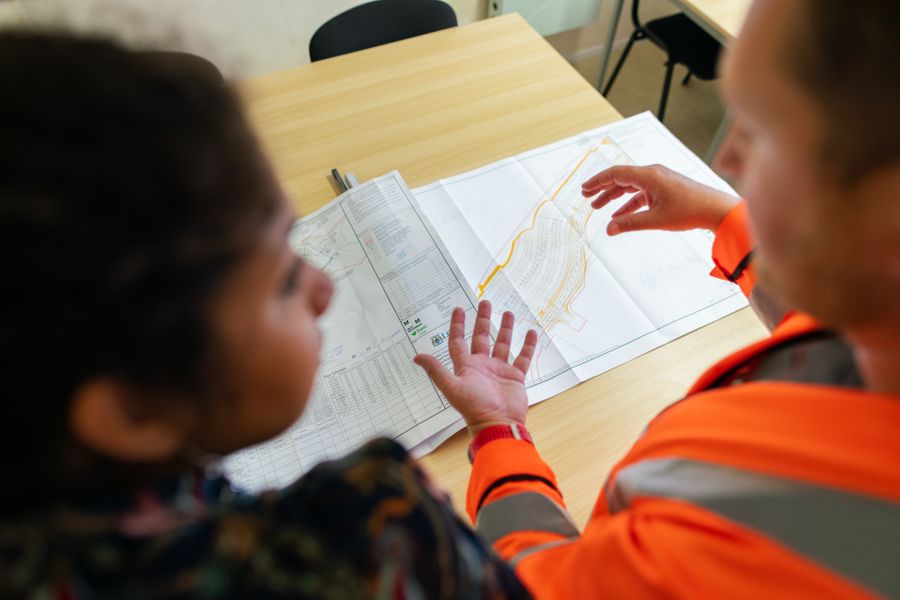
Every construction worker has sat through a toolbox talk that had nothing to do with what they were actually about to do that day. The topic was trenching safety while the crew was installing curtain wall on the eighth floor. Or it was about electrical hazards while the team was pouring foundations. The safety person pulled the next topic from the binder, read through it, and everybody signed the attendance sheet.
This checks a compliance box. It does not do much for actual safety. AI-generated toolbox talks are different because they respond to the specific hazards that workers will face on that particular day.
Why Generic Talks Fall Short
The intent behind daily toolbox talks is sound: brief, focused safety discussions about the specific hazards workers will encounter during their shift. OSHA does not mandate specific topics or formats, but the expectation is that the content is relevant to the work being performed.
The reality on most projects is that toolbox talks follow a rotating schedule of generic topics. The topics are all legitimate safety concerns. But a talk about ladder safety on a day when nobody is using ladders is a missed opportunity. Meanwhile, the crew is about to work adjacent to an active crane operation, and nobody mentioned that.
The problem is that generating truly relevant content every day is time-consuming. The superintendent or safety professional would need to review the day's schedule, check the weather, consider what activities are happening in adjacent areas, review any recent near-misses or incidents, and then create a focused briefing that addresses all of those factors. That level of daily preparation is unrealistic when you are also trying to manage the actual construction work.
How AI Generates Relevant Content
AI toolbox talk generation pulls data from multiple project systems to create targeted content. It starts with the look-ahead schedule to identify what activities are planned for the day. It checks the weather forecast for conditions that affect safety: wind, rain, extreme heat or cold. It reviews recent incident reports and near-miss data from the project and from similar projects in the company portfolio.
The system then generates a briefing that addresses the actual risks of the day. If the schedule shows concrete placement and the forecast calls for high temperatures, the talk covers both concrete work safety and heat illness prevention. If crane operations are planned in an area where multiple trades will be working, the talk covers the crane exclusion zone and communication protocols specific to that lift sequence.
The content is not boilerplate. The AI generates specific, actionable guidance based on the actual conditions. Instead of generic advice about heat safety, the talk includes the day's forecast high temperature, the scheduled break times adjusted for heat, the location of the nearest cooling station, and the signs of heat illness that coworkers should watch for.
Near-Miss and Incident Integration
One of the most effective features is the integration with incident and near-miss reporting. If a near-miss was reported yesterday involving a dropped tool at height, the AI incorporates that specific event into the next day's toolbox talk for any crew working at elevation. The talk references the actual incident, not a hypothetical scenario, which makes the discussion more immediate and relevant.
The system also tracks industry incident data. If there has been a cluster of trench collapses regionally, the AI flags this for any crew performing excavation work, even if the project itself has not had any trenching issues. This kind of external awareness is difficult to maintain manually but straightforward for an AI monitoring industry safety data feeds.
Trade-Specific Content
Different trades face different hazards, and the AI generates trade-specific briefings rather than one-size-fits-all talks. The ironworkers get content focused on their specific activities and risks. The electricians get content relevant to their work. The laborers doing concrete placement get content tailored to that activity.
This trade-specific approach also means the content can address the interactions between trades. When the electrical crew's toolbox talk mentions that the concrete pour will restrict their access to a specific area between 10 AM and 2 PM, and the concrete crew's talk mentions that electricians may be working nearby and to maintain awareness, the coordination happens at the field level where it matters most.
Language and Literacy Considerations
AI-generated toolbox talks can be automatically translated into multiple languages and adjusted for varying literacy levels. On projects with multilingual workforces, the system generates the same content in English and Spanish (or other relevant languages) so that every worker receives the safety message in a language they understand fully.
The content can also incorporate visual aids, generating simple diagrams or highlighting relevant photos from the project to illustrate key safety points. Visual communication is more effective than text-heavy handouts, particularly for hazard awareness and spatial safety concepts like exclusion zones and evacuation routes.
Construction companies looking to make their daily safety briefings more relevant and effective can explore AI safety management tools for construction that integrate with project scheduling and incident reporting systems.
Measuring Effectiveness
The ultimate measure of a toolbox talk program is whether it prevents incidents. AI-generated talks create an opportunity to measure this by tracking the correlation between talk topics and subsequent incident rates. If a project consistently has fewer incidents in areas where the morning briefing addressed the specific hazards, the program is working. If not, the content or delivery method needs adjustment. That feedback loop is what turns a compliance exercise into an actual safety tool.