










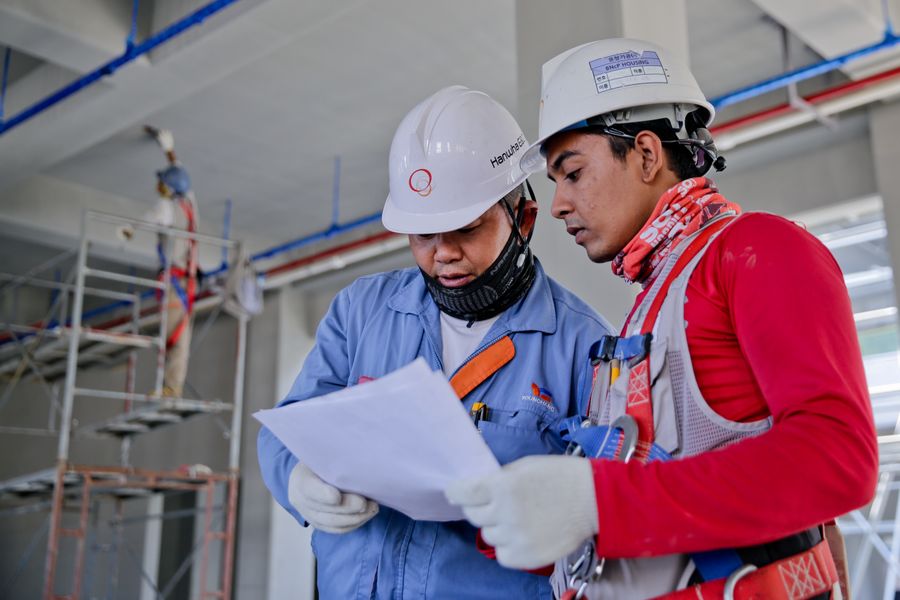
A medium-size general contractor with 5 active projects generates roughly 2,000 pages of safety documentation per month. Toolbox talks, daily safety inspections, equipment inspection logs, training records, incident reports, JSA/JHA forms, and competent person designations. All of this paperwork exists for a reason, but the administrative burden pulls safety professionals away from the site observation and worker interaction that actually prevents injuries.
The Documentation Burden
OSHA requires specific documentation for virtually every safety-related activity on a construction site. Crane inspections must be documented before each shift. Confined space entry permits must be completed for each entry. Fall protection plans must be written for each project. Excavation competent persons must be designated and documented. Hazard communication programs must be current and accessible.
The cumulative paperwork requirement means that a project safety officer on a large commercial project can easily spend 3 to 4 hours per day on documentation. That is 3 to 4 hours not spent walking the site, talking to workers, observing conditions, and coaching behaviors. The administrative requirements intended to improve safety can actually reduce safety by consuming the time of the people responsible for it.
A survey of 200 construction safety professionals found that 71% believed they spent too much time on documentation and not enough on field observation. The average reported split was 55% office/documentation and 45% field time. The professionals surveyed believed the optimal split would be 30% office and 70% field.
What AI Automates
AI documentation tools address this imbalance by automating the creation, formatting, and filing of standard safety documents. The safety officer speaks into their phone while walking the site. The AI transcribes the observation, identifies the type of document being created (daily inspection, toolbox talk, hazard observation), formats it according to the company's standard templates, and files it in the correct project folder with the correct date stamp.
Toolbox talk documentation is a simple example. The safety officer conducts the talk, recording it on their phone. The AI generates a written summary, extracts the topic and key points, creates a sign-in sheet format, and files the completed document. What previously required 20 minutes of typing after the talk now requires 30 seconds of review and approval on the phone.
Equipment inspection logs are another high-volume documentation task that AI handles well. The operator performs the inspection, calling out each checkpoint and its status. The AI formats the inspection into the required log format, flags any deficiencies noted, and routes the completed log to the equipment coordinator. A crane pre-shift inspection that previously generated a 2-page handwritten form now generates a clean digital record in the time it takes to walk around the crane.
Compliance Gap Detection
Beyond document creation, AI tools monitor compliance documentation for gaps and expiration dates. Training certifications that are approaching expiration get flagged 30 days in advance. Daily inspections that were not completed get highlighted on the safety dashboard. Permits that should have been closed out after work completion get identified as still open.
This monitoring catches the documentation gaps that create OSHA citation exposure. An OSHA inspection that finds missing daily crane inspection logs for 3 days last month is a documentation violation regardless of whether the cranes were actually inspected. The AI ensures that the paper trail is complete even when the field work was done properly but the paperwork was forgotten.
A commercial GC in Florida used AI compliance monitoring and found 47 documentation gaps across 3 projects in the first month of implementation. These included 12 missing daily equipment inspections, 8 expired training certifications, 6 incomplete confined space permits, and 21 toolbox talks that were conducted but not documented. All of these represented potential citation exposure that the traditional manual tracking system had missed.
Training Record Management
Construction worker training records are a particular pain point. Workers move between projects and between employers. Each project needs to verify that every worker on site has current training for the hazards they will encounter. OSHA 10-hour or 30-hour certification, fall protection training, scaffold user training, confined space training, crane signal person qualification, and equipment-specific certifications all need to be tracked.
AI systems can maintain a centralized training database that each project accesses to verify worker qualifications. When a new worker arrives on site, the system checks their training records against the project's requirements and identifies any gaps. This replaces the manual process of reviewing paper certificates, calling previous employers, and maintaining spreadsheets that are always slightly out of date.
For contractors managing AI-enhanced construction operations, the training record system also provides workforce analytics. It shows which training areas have the highest gap rates across the workforce, which helps prioritize training investments. If 30% of incoming workers lack current fall protection training, that suggests a need for more frequent fall protection classes or a change in hiring qualification requirements.
Incident Documentation and Reporting
When incidents do occur, the documentation requirements intensify. OSHA recordable injuries require specific forms (OSHA 300, 300A, 301) completed within defined timeframes. Serious injuries require notification to OSHA within specific time windows. Near-miss reports, witness statements, root cause analyses, and corrective action plans all need to be created, reviewed, and filed.
AI tools help structure this documentation process. They prompt the safety officer through the required information for each type of incident, ensure all required fields are completed, calculate the OSHA recordability classification based on the injury details, and generate the required forms automatically. They also track corrective action completion, ensuring that the actions identified in the investigation are actually implemented and documented.
The time savings during incident documentation is particularly valuable because incidents typically occur at the worst possible time for administrative work. The safety officer needs to be managing the immediate response, supporting the injured worker, preserving the scene, and coordinating with medical providers. Having AI handle the documentation formatting allows the safety officer to focus on the human and operational priorities while the paperwork takes care of itself in the background.
The Practical Adoption Path
Most contractors adopt AI compliance tools incrementally. They start with one or two high-volume document types, typically daily inspections and toolbox talks, and expand as the safety team becomes comfortable with the technology. Full implementation across all documentation types typically takes 3 to 6 months.
The integration with existing safety management software varies. Some AI documentation tools are standalone apps that export to common formats. Others integrate directly with platforms like Procore Safety, Safesite, or iAuditor. The integration approach determines how much of the existing workflow changes and how much data migration is required.
What the early adopters consistently report is that the time savings are real and significant. Safety officers who were spending 55% of their time on documentation typically shift to 25 to 30% after AI tool implementation. The remaining documentation time is spent on review and approval rather than creation and data entry. The freed-up time goes directly into field observation and worker engagement, which is where safety professionals know they add the most value.