










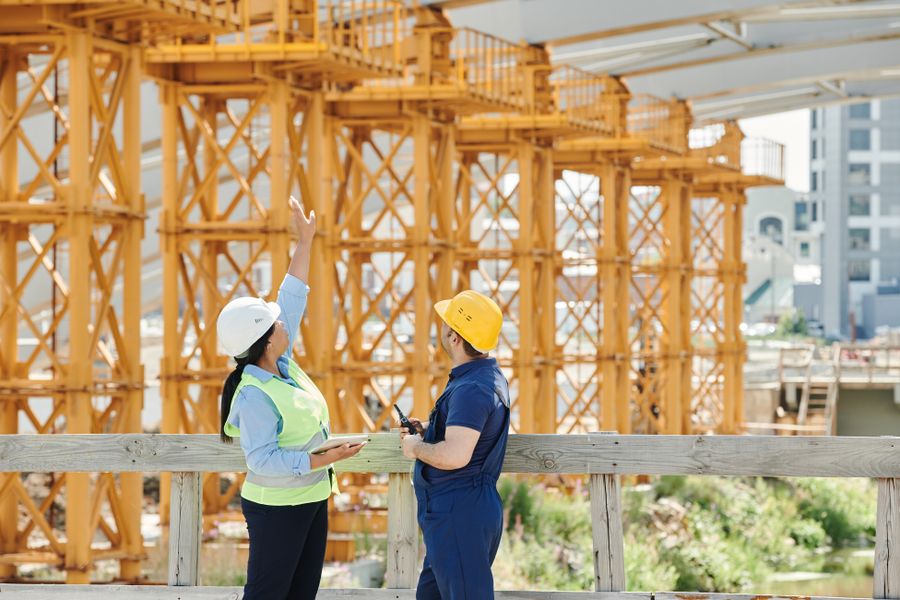
La construction hivernale dans les climats froids requiert des enclos temporaires et des systèmes de chauffage qui maintiennent les zones de travail suffisamment chaudes pour permettre le durcissement des matériaux, le séchage des finitions et le maintien de la productivité des ouvriers. Le coût du chauffage et de l'enclos temporaires peut être substantiel, et les décisions sur ce qu'il faut enclore, à quel moment et avec quelle puissance de chauffage ont des impacts importants à la fois sur le budget et sur le calendrier.
La planification par IA pour la construction hivernale optimise ces décisions en modélisant les besoins thermiques de chaque activité, le coût des différentes options d'enclos et de chauffage, et l'impact de différentes conditions de température sur la productivité.
Le défi de la construction hivernale
De nombreuses activités de construction présentent des exigences de température. Le béton ne peut être coulé ou durci en dessous de certaines températures sans protection. Les peintures et revêtements ont des températures minimales d'application. L'enduit de cloison sèche exige des conditions spécifiques pour sécher correctement. Les colles de revêtement de sol ont besoin de températures minimales pour adhérer correctement. Même le montage de la structure métallique devient plus dangereux par grand froid car l'acier devient plus fragile et la dextérité des ouvriers diminue.
L'approche traditionnelle consiste à fermer le bâtiment le plus tôt possible (enveloppe extérieure temporaire ou définitive) et à chauffer l'intérieur pour maintenir des températures de travail. Mais l'enclos et le chauffage sont coûteux, et le calendrier et l'ampleur de l'investissement impliquent des arbitrages difficiles à optimiser manuellement.
Comment l'IA planifie la stratégie d'enclos
La planification IA de la construction hivernale part du calendrier de construction et des exigences de température de chaque activité prévue. Le système met en correspondance ces exigences avec les données météo historiques du site pour identifier où et quand un contrôle climatique temporaire est nécessaire.
L'analyse considère plusieurs options d'enclos : composants permanents de l'enveloppe du bâtiment installés tôt pour fournir une fermeture, bâches temporaires ou enclos en polyéthylène moins coûteux mais moins efficaces, enclos partiels protégeant des zones de travail spécifiques plutôt que l'ensemble du bâtiment, et ajustements de séquencement priorisant les travaux sensibles aux intempéries pendant les périodes plus douces.
Pour chaque option, l'IA calcule le coût (matériaux, installation, retrait, énergie de chauffage) et le bénéfice (calendrier maintenu, retards météo évités, qualité préservée). L'optimisation détermine la combinaison d'enclos, de chauffage et d'ajustements de calendrier qui minimise la prime hivernale totale tout en respectant les exigences de calendrier et de qualité du projet.
Dimensionnement et placement des systèmes de chauffage
Les systèmes de chauffage temporaires doivent être dimensionnés en fonction de l'espace qu'ils chauffent, des températures extérieures auxquelles ils sont confrontés et des caractéristiques de déperdition thermique de l'enclos temporaire. Des systèmes surdimensionnés gaspillent du combustible et de l'argent. Des systèmes sous-dimensionnés ne maintiennent pas les températures requises, compromettant la qualité du travail et le calendrier.
La modélisation thermique par IA calcule la charge de chauffage de chaque espace clos en fonction des caractéristiques de l'enclos, des conditions extérieures et des exigences de température intérieure. Le système précise le type, la taille et l'emplacement des appareils de chauffage pour maintenir les conditions requises tout en minimisant les coûts énergétiques et les risques liés au monoxyde de carbone.
Planification progressive de l'enclos
Sur un bâtiment à plusieurs étages, la stratégie d'enclos évolue à mesure que l'enveloppe permanente est installée. L'IA planifie cette progression, en identifiant le moment où chaque section du bâtiment passe de l'enclos temporaire à l'enveloppe permanente et en ajustant le plan de chauffage en conséquence. À mesure que l'enveloppe permanente prend le relais, les enclos temporaires sont déplacés vers les zones qui en ont encore besoin et les besoins de chauffage diminuent à mesure que le bâtiment devient plus efficient sur le plan thermique.
Cette planification progressive évite l'erreur courante consistant à maintenir enclos et chauffage temporaires dans des zones où l'enveloppe permanente assure déjà une protection adéquate, gaspillant ainsi de l'argent en climatisation redondante.
Les entreprises travaillant en climat froid peuvent explorer comment les outils de planification IA pour la construction optimisent les stratégies de construction hivernale afin de maintenir le calendrier et la qualité tout en maîtrisant les coûts de chauffage et d'enclos temporaires.
L'analyse du seuil de rentabilité
Parfois, la stratégie hivernale optimale consiste à ne pas travailler du tout pendant l'hiver. Pour certaines activités et certains projets, le coût de la protection hivernale dépasse le coût du retard de calendrier qui résulterait de l'attente d'un temps plus clément. L'IA modélise cet arbitrage en comparant le coût total de la construction hivernale (enclos, chauffage, productivité réduite, risque qualité) au coût d'une prolongation de calendrier (frais généraux étendus, revenus différés, pénalités contractuelles). La réponse varie selon le projet, l'activité et la sévérité attendue de l'hiver.