










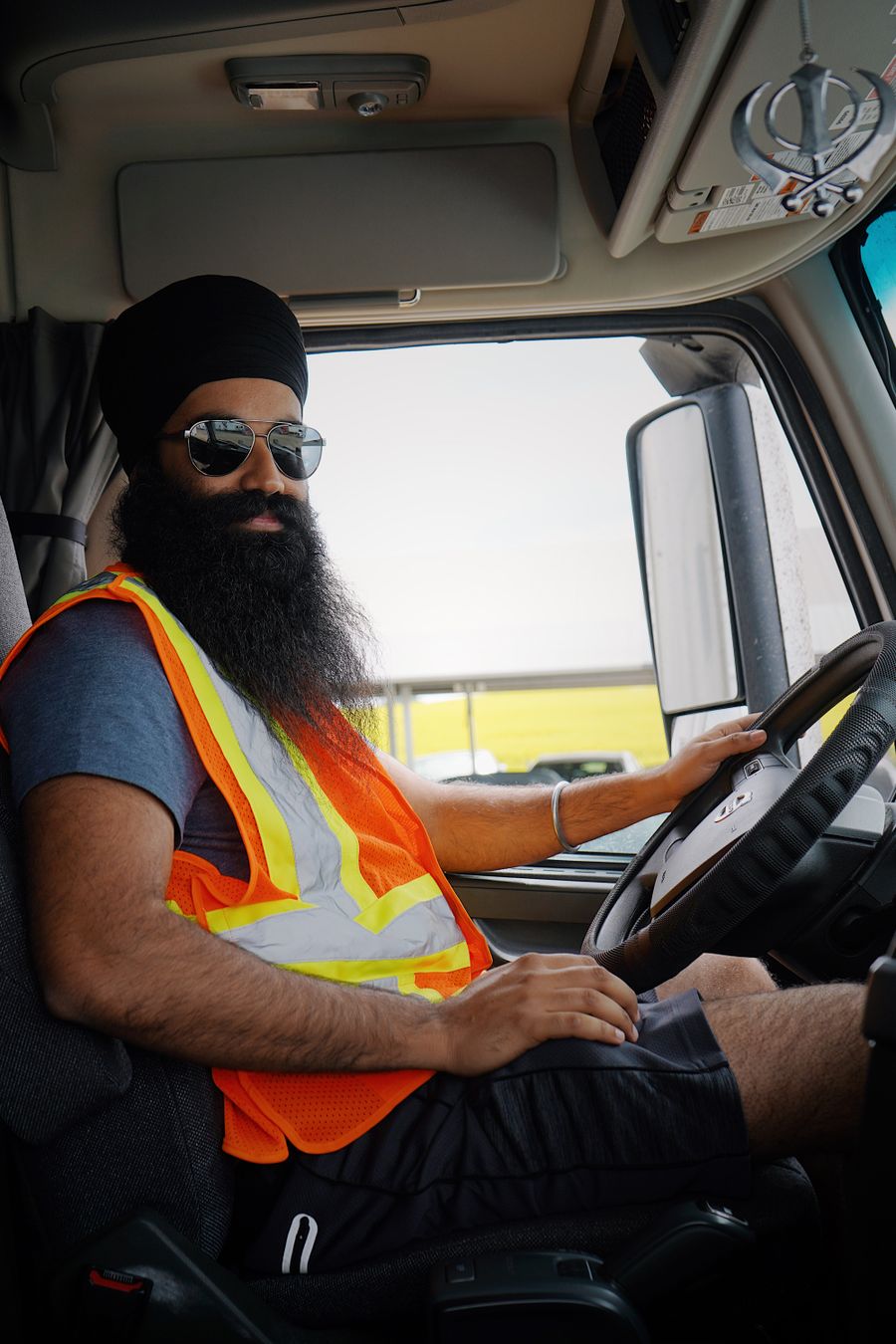
Hours of service regulations exist because driver fatigue is dangerous. The logic is straightforward: limit driving hours, mandate rest breaks, and fatigue-related accidents should decrease. And to be fair, HOS rules have helped. But anyone in the industry knows the gap between being legally compliant and being actually alert. A driver can be fully within their HOS window and still be impaired by fatigue because they slept poorly, because they are running a night schedule their body has not adjusted to, or because they have been doing physically demanding work during their off-duty time.
This is where AI starts adding value that regulations alone cannot provide.
What Biometric Monitoring Actually Measures
The biometric side of fatigue management typically involves camera-based systems mounted in the cab that track eye behavior. The specific indicators include PERCLOS (the percentage of time the eyes are closed over a given interval), blink frequency and duration, gaze direction and stability, and head position and nodding patterns.
These are not abstract metrics. Research going back decades has established strong correlations between these eye and head behaviors and measurable cognitive impairment. A driver whose blink duration is increasing and whose gaze is becoming less focused is demonstrably less alert, regardless of what their HOS log says.
Some systems also incorporate wearable devices that track heart rate variability, which is another validated indicator of fatigue. When heart rate variability decreases in certain patterns, it suggests the autonomic nervous system is moving toward a drowsy state.
The Telematics Side
Biometric data by itself tells you about the driver physiological state. Telematics data tells you about their driving behavior. AI combines both because the intersection is where the strongest signals live.
On the telematics side, the system watches for lane departure frequency and severity, steering micro-corrections (the small, jerky corrections that drowsy drivers make), speed variability within a lane, following distance consistency, and reaction time to traffic events like brake lights from the vehicle ahead.
A driver who is maintaining proper lane position, consistent speed, and appropriate following distance but whose biometric data shows early fatigue indicators is in a different risk category than a driver who is showing both biometric and behavioral signs. The AI calibrates its response accordingly.
Building Individual Baselines
One of the smarter aspects of these systems is that they learn individual baselines. Normal driving behavior varies from person to person. Some drivers naturally have a wider range of head movement. Some blink more frequently as a baseline. The AI builds a profile for each driver during their alert, well-rested periods and then measures deviations from that personal baseline rather than comparing against a generic standard.
This personalization reduces false alerts significantly. Early fatigue monitoring systems had a reputation for crying wolf, which made drivers distrust them and sometimes disable or cover the cameras. Systems that understand individual baselines generate fewer unnecessary alerts, which builds driver acceptance over time.
Intervention Tiers
Effective AI fatigue management does not treat every detection the same way. Most systems use a tiered approach. At the first tier, when early indicators appear, the system might issue a gentle cabin alert, perhaps a tone and a suggestion to take a break at the next available stop. At the second tier, when multiple indicators are present, the alert becomes more insistent and the fleet manager receives a notification. At the third tier, when the system detects imminent drowsiness or actual microsleep events, it triggers an aggressive alarm and immediately notifies dispatch.
The tiered approach matters because it treats fatigue as a spectrum rather than a binary state. A driver who is showing early signs can often self-correct with a 15-minute break, some fresh air, or a schedule adjustment. A driver in an advanced fatigue state needs to stop driving immediately.
Schedule Optimization Based on Fatigue Patterns
The longer-term value of AI fatigue management goes beyond real-time alerts. When you accumulate fatigue data across your fleet over months, patterns emerge that can inform scheduling decisions.
You might discover that a particular driver consistently shows fatigue signs after 7 hours even though they are legal for 11. Or that drivers on certain routes with specific types of terrain or traffic conditions fatigue faster than the route distance would suggest. Or that drivers transitioning from day to night schedules need longer adaptation periods than your current rotation allows.
This data lets operations teams build schedules that account for actual fatigue risk rather than just legal driving time limits. The HOS clock becomes the outer boundary, while data-driven fatigue management sets a more realistic inner boundary for each driver and route combination.
The Privacy Conversation
In-cab cameras monitoring driver faces generate legitimate privacy concerns, and ignoring those concerns is a mistake. The most successful implementations are transparent about what data is collected, how it is used, who can access it, and how long it is retained. Drivers need to understand that the system is monitoring alertness indicators, not recording their personal activities. Most systems do not store continuous video but rather process the video feed in real time and only retain data when a fatigue event is detected.
Carriers that frame fatigue monitoring as a safety tool rather than a surveillance mechanism get better adoption. The framing is not just spin. A drowsy driving accident can end a career or a life. A system that wakes you up before you drift into oncoming traffic is protecting you, not policing you.
Real Results
Fleets using AI-driven fatigue management systems report measurable reductions in fatigue-related incidents. The numbers vary by implementation, but reductions of 50 to 70 percent in drowsy driving events are common in published case studies. The ROI calculation is straightforward when you consider the cost of a single fatigue-related accident, which typically runs well into six figures when you account for vehicle damage, cargo loss, liability, insurance increases, and potential regulatory consequences.
For more on how AI is improving safety and operations in the transportation sector, see FirmAdapt's logistics and transportation analysis.