










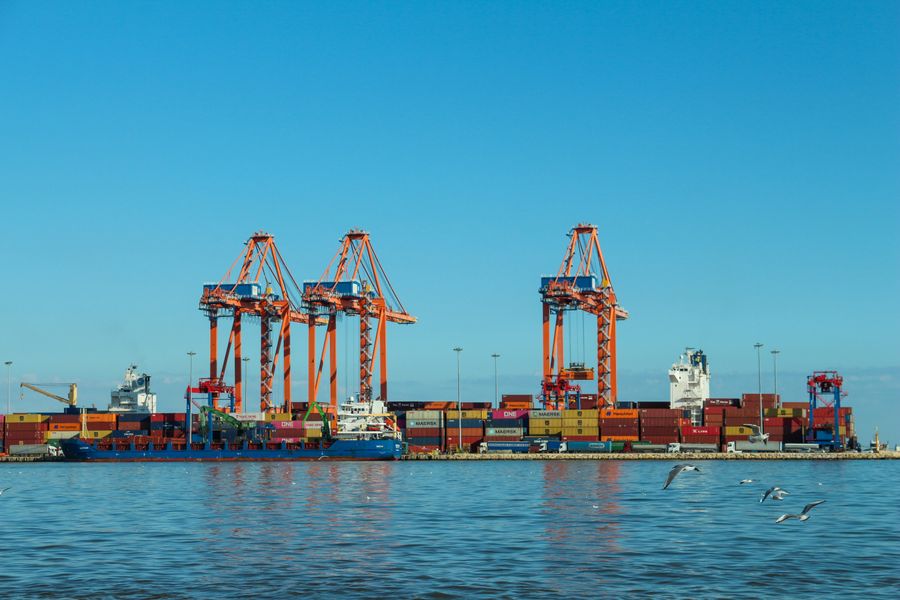
An international shipment from a factory in Shenzhen to a distribution center in Columbus, Ohio might involve a truck from the factory to the port, an ocean vessel to Long Beach, a rail intermodal service to Chicago, and a truck for final delivery. Each segment has its own carrier, booking process, documentation requirements, and timing constraints. Coordinating all of these segments so the shipment flows smoothly is what freight forwarders do, and it is exactly the kind of multi-variable coordination problem that AI excels at.
Multi-Modal Route Optimization
For most international shipments, there are multiple viable routing options. The same Shenzhen-to-Columbus shipment could go through Long Beach by ocean and then truck, through Long Beach by ocean and rail, through the Panama Canal to Savannah and then truck, or by air through a gateway airport. Each option has a different cost, transit time, reliability profile, and carbon footprint.
AI evaluates all viable routing options based on the shipment requirements (delivery deadline, cost budget, product characteristics) and current conditions (vessel schedules, port congestion, rail capacity, air freight rates). The recommendation balances cost against speed against reliability, weighted according to the shipment priority.
Booking Coordination
Once the route is selected, AI coordinates bookings across all carriers in the chain. The ocean booking feeds the pickup schedule at origin. The port arrival estimate drives the rail or truck booking at destination. Each booking is linked so that changes to one segment automatically trigger adjustments to downstream segments.
When a vessel is delayed, the system automatically evaluates whether the downstream connections can still be made or whether rebooking is needed. If the rail service at destination has a cutoff time and the vessel delay means missing it, the system either books the next rail service or suggests a truck alternative with the cost and time implications clearly presented.
Documentation Across Modes
Each transportation mode has its own documentation requirements. Ocean shipments need a bill of lading. Air shipments need an air waybill. Domestic truck and rail segments need bills of lading with different formats. Customs clearance at ports of entry requires import documentation. AI generates all required documentation for each segment from a single set of shipment data, ensuring consistency across all documents.
Handoff Management
The critical points in multi-modal transportation are the handoffs between modes. Cargo arriving at a port needs to be discharged, cleared through customs, and loaded onto the next transportation mode. Each handoff involves physical handling, documentation transfer, and potential delays.
AI tracks each handoff point, monitors progress against the plan, and alerts when a handoff is at risk. If port congestion is delaying container discharge, the system recalculates the downstream timeline and identifies whether any action is needed to maintain the delivery schedule.
Cost Allocation
Multi-modal shipments generate costs from multiple carriers and service providers. AI systems track and allocate costs by segment, making it possible to see not just the total shipment cost but the cost contribution of each mode and each carrier. This visibility supports carrier negotiations and routing optimization by identifying which segments offer the most opportunity for cost reduction.
For more on how AI coordinates international logistics operations, see FirmAdapt's logistics and transportation analysis.