










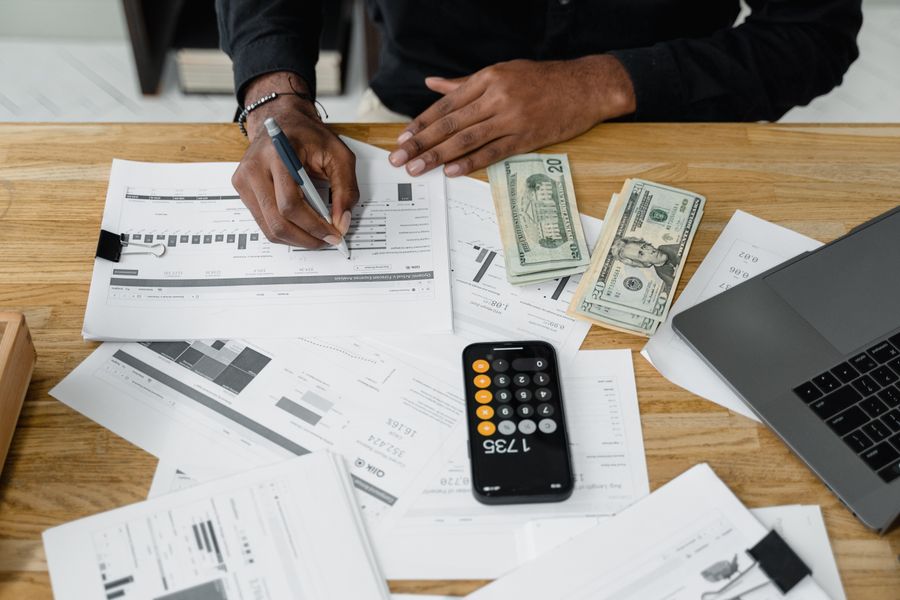
Every accounting firm that has tried to automate expense report processing with a basic OCR solution has had the same experience. The OCR reads the receipt. It captures the date, amount, and vendor name with reasonable accuracy, maybe 85-90%. Then it dumps that data into a spreadsheet or accounting system, and a staff accountant still needs to verify the data, check it against the company's expense policy, code it to the right GL account, and flag anything suspicious. The OCR handled maybe 20% of the actual work.
The gap between "capturing receipt data" and "processing an expense report" is where most automation attempts stall. Capturing data is a technology problem that OCR mostly solves. Processing an expense report is a judgment problem that requires context, policy knowledge, and pattern recognition.
What OCR Gets Right and Where It Stops
Modern OCR, especially when combined with basic AI, is quite good at extracting structured data from receipts. It can read the total, the date, the vendor name, and often individual line items. Accuracy on clean receipts (printed, high contrast, standard format) runs 92-96%. On photographed receipts (crumpled, faded, poor lighting), accuracy drops to 75-85%.
But extraction accuracy is just the beginning. Consider what a complete expense report processing workflow requires:
- Data extraction from the receipt (OCR handles this)
- Merchant categorization (is this a restaurant, airline, hotel, office supply store?)
- Policy compliance checking (is this expense within the per diem limit? Is alcohol included and needs to be separated? Is this a weekend expense that requires justification?)
- Duplicate detection (was this receipt already submitted? Is this charge also on a corporate card statement?)
- GL coding based on the expense type, project, and client
- Tax handling (identifying reclaimable VAT, separating tips from meal costs)
- Approval routing to the correct manager based on amount thresholds
- Integration with the accounting system and corporate card reconciliation
OCR handles item one. A complete expense processing system handles all eight.
Intelligence Beyond Data Capture
The expense processing systems that actually reduce workload for accounting teams go beyond data extraction to include contextual understanding. When a receipt shows a $250 dinner for two people on a Tuesday night, the system checks: does this employee have client entertainment approval? Is the amount within the entertainment per diem? Were other team members at the same dinner (duplicate risk)? Is the restaurant in the employee's usual work city or a travel destination?
This kind of analysis requires integration with multiple data sources: the company's expense policy, the employee's role and approval authorities, their travel itinerary if one exists, corporate card transactions, and historical expense patterns. An ML model trained on a company's historical expense data learns what normal looks like and flags deviations.
Anomaly detection is particularly valuable. A system that has processed 12 months of expenses for a company knows that the average sales team dinner runs $45 per person, that hotel expenses in New York average $280/night, and that cab receipts over $50 are unusual. When an expense falls outside these patterns, it gets flagged for review, not automatically rejected, but highlighted so a human can assess it.
The Duplicate Problem
Duplicate expense submissions cost companies an estimated 1-5% of their total expense spend, according to industry research. Duplicates happen innocently (an employee submits a receipt and also gets the charge from a corporate card statement) and sometimes not so innocently.
OCR alone cannot catch duplicates reliably because the same expense might appear as a receipt image, a corporate card transaction with a different description, and a line item on a hotel folio. Matching these requires understanding that the $47.50 charge at "UBER TRIP ABCDE" on the card statement is the same as the Uber receipt showing a $47.50 ride from the airport to downtown.
ML-based duplicate detection cross-references across data sources and time windows, catching duplicates that would be nearly impossible to identify manually at scale. For a company processing 5,000 expense items per month, catching even 2% in duplicates saves $100,000+ annually at an average expense of $100 per item.
What This Means for Accounting Firms
Accounting firms processing expenses for clients have a particular set of needs. They need multi-client support with client-specific policies and GL mappings. They need the ability to handle different expense categories and thresholds per client. And they need reporting that helps clients understand their spending patterns, not just process their receipts.
The advisory opportunity here is significant. When you can show a client that their T&E spending increased 23% last quarter, driven primarily by a 40% increase in travel costs from the sales team, and that their per-meal spending is 30% above the industry benchmark, you are providing insight that goes well beyond bookkeeping.
Implementation Considerations
The transition from manual or OCR-only expense processing to a full automation platform typically takes 4-8 weeks per client. The setup involves configuring expense policies, GL mappings, approval hierarchies, and integration with corporate cards and accounting systems. The data migration is straightforward since most expense data is relatively simple in structure.
Employee adoption is usually the biggest variable. Systems that offer a good mobile app for receipt capture and submission see 85-90% adoption within the first month. Systems that require employees to log into a web portal, upload images, and fill out forms see 50-60% adoption, with the remainder continuing to submit paper receipts or unstructured emails.
The best metric for measuring success is not receipt capture accuracy. It is end-to-end processing time: how long from receipt submission to GL posting. Manual processing typically takes 5-10 business days. Full automation with good employee adoption brings this down to 24-48 hours, with most of that time being the approval wait rather than processing time.