










Dental practices operate on thinner margins than most medical specialties, with overhead typically running 60% to 75% of collections. That means a 15% revenue improvement does not just add 15% to the top line. It can double or triple the practice's net income. The challenge is that revenue leakage in dental practices is distributed across dozens of small gaps that are individually hard to see but collectively significant.
Treatment Plan Acceptance Rates
The average dental practice has a treatment plan acceptance rate of 50% to 60%, meaning that 40% to 50% of recommended treatment never gets scheduled. For a practice presenting $2 million in treatment plans annually, that is $800,000 to $1 million in accepted but unscheduled or simply declined treatment.
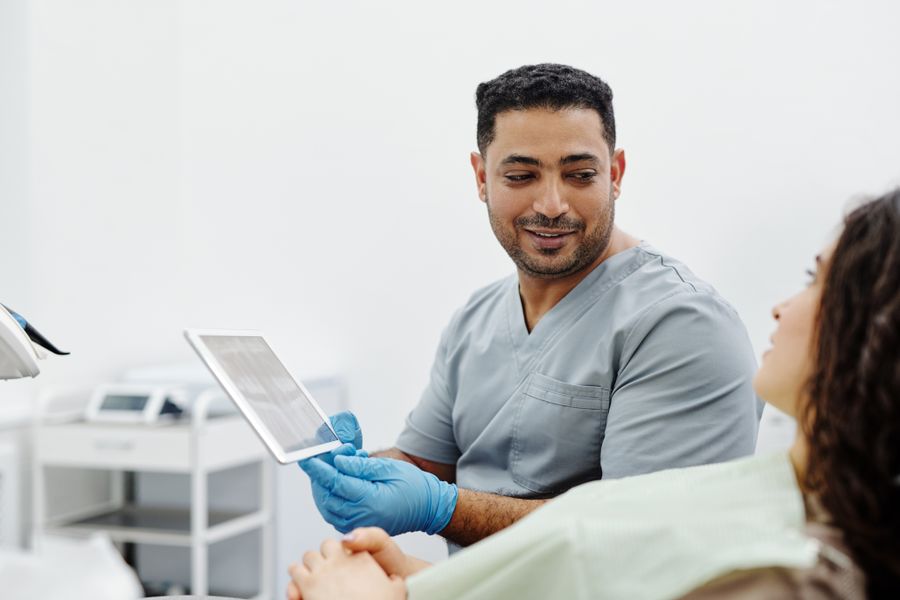
AI analytics can identify patterns in treatment acceptance that help practices improve their conversion rates. Which providers have higher acceptance rates? At what point in the patient visit is treatment presented? How does the way treatment cost is communicated affect acceptance? Does offering payment plans at the time of presentation change the acceptance rate?
One multi-location dental group used AI analysis of their treatment presentation data and discovered that treatment plans presented with a specific cost estimate and payment plan option had a 73% acceptance rate, compared to 48% for plans presented without financial context. Simply training all providers to include cost and payment information in treatment discussions increased their system-wide acceptance rate from 52% to 67%, representing approximately $450,000 in additional scheduled production annually across their 6 locations.
Unbilled and Underbilled Services
Dental practices routinely provide services that never make it onto a claim. The most common examples are diagnostic services like periapical radiographs taken during a procedure, palliative treatment provided during an emergency visit, or desensitizing agents applied after a scaling and root planing procedure. Each of these has a billable CDT code, but if the clinical team does not initiate the charge, the service goes unbilled.
AI charge capture in dental works similarly to medical charge capture. The system reviews clinical notes and charting entries, compares them against billed services, and flags potential unbilled procedures. A note documenting the application of fluoride varnish during a prophylaxis visit should have a corresponding D1206 charge. If it does not, the system alerts the billing team.
Fee schedule analysis is another area where AI identifies revenue gaps. Many dental practices have not updated their UCR (usual, customary, and reasonable) fees in years. When AI compares a practice's fee schedule against regional benchmarks and payer reimbursement data, it often finds that the practice is charging below what payers are willing to pay for certain procedures. Increasing fees on underbilled procedures to match regional norms can increase collections by 3% to 8% without any change in patient volume or treatment mix.
Insurance Benefit Maximization
Dental insurance typically operates on an annual maximum model, where each patient has a set dollar amount (usually $1,000 to $2,500) of coverage per year. Patients who do not use their full annual maximum by year-end lose that benefit. AI can identify patients who have significant unused benefits approaching their plan renewal date and prompt the practice to reach out with a reminder.
This is not about recommending unnecessary treatment. It is about ensuring that patients who have recommended treatment on file are aware that their insurance will help cover it and that the coverage expires soon. A patient who was told they need a crown six months ago but has not scheduled might be motivated by a reminder that their insurance will cover 50% of the cost, but only if they schedule before December 31.
Dental practices that implement systematic year-end benefit utilization outreach typically see a 15% to 25% increase in November and December production. For a practice that normally produces $150,000 per month, a 20% increase in the last two months adds $60,000 in annual revenue. Healthcare AI platforms that integrate patient benefit data with treatment plan status make this outreach systematic rather than ad hoc.
Scheduling Optimization
Dental chair time is the practice's primary revenue-generating asset. Every minute a chair sits empty is lost revenue that cannot be recovered. AI scheduling optimization analyzes production data by appointment type, provider, day of week, and time of day to identify scheduling patterns that maximize production.
Common findings include hygiene appointments that consistently run 15 minutes over their scheduled time, creating cascading delays that reduce the number of patients seen per day. Or high-production procedures like crowns and bridges being scheduled in the afternoon when provider energy is lower, leading to longer appointment times and reduced daily production. Or new patient exams being given 60-minute slots when data shows they consistently complete in 45 minutes, wasting 15 minutes of chair time per new patient.
AI scheduling tools can suggest optimized schedule templates based on the practice's actual production data. The recommendations are specific: schedule crown preps in the 9 AM to 11 AM block when the provider's production per hour is highest, shorten hygiene recall appointments from 60 to 50 minutes based on actual average completion time, and block the last appointment slot of the day for emergency patients who would otherwise be turned away.
Hygiene Department Optimization
The hygiene department typically generates 25% to 35% of a dental practice's revenue directly through prophylaxis, periodontal maintenance, and scaling procedures, plus an additional contribution through restorative treatment diagnosed during hygiene visits. Optimizing hygiene production has an outsized impact on practice revenue.
AI analysis of hygiene production data often reveals that practices are under-diagnosing periodontal disease. National prevalence data suggests that 47% of adults over 30 have some form of periodontal disease, but many practices treat only 10% to 15% of their patient base with periodontal procedures. The gap between prevalence and treatment represents both a clinical quality issue and a revenue opportunity.
Automated perio charting analysis can flag patients whose clinical data suggests periodontal disease but who are receiving standard prophylaxis rather than periodontal treatment. This is not about billing for services that are not needed. It is about identifying patients who clinically need periodontal care and are not receiving it, which benefits both the patient's oral health and the practice's revenue.
Pulling It Together
The 15% revenue improvement that AI typically identifies in dental practices comes from multiple sources, each contributing a few percentage points. Treatment acceptance improvements might add 3% to 5%. Unbilled service capture adds 2% to 3%. Fee schedule optimization adds 2% to 4%. Benefit utilization outreach adds 1% to 2%. Scheduling optimization adds 2% to 3%. No single change is transformative on its own, but combined they represent a meaningful shift in practice economics.
Dental practices that approach revenue optimization systematically, addressing each leak point rather than looking for a single big fix, consistently outperform those that focus on volume alone. Seeing more patients is one way to grow revenue. Capturing more value from each patient interaction is often the more sustainable path.