










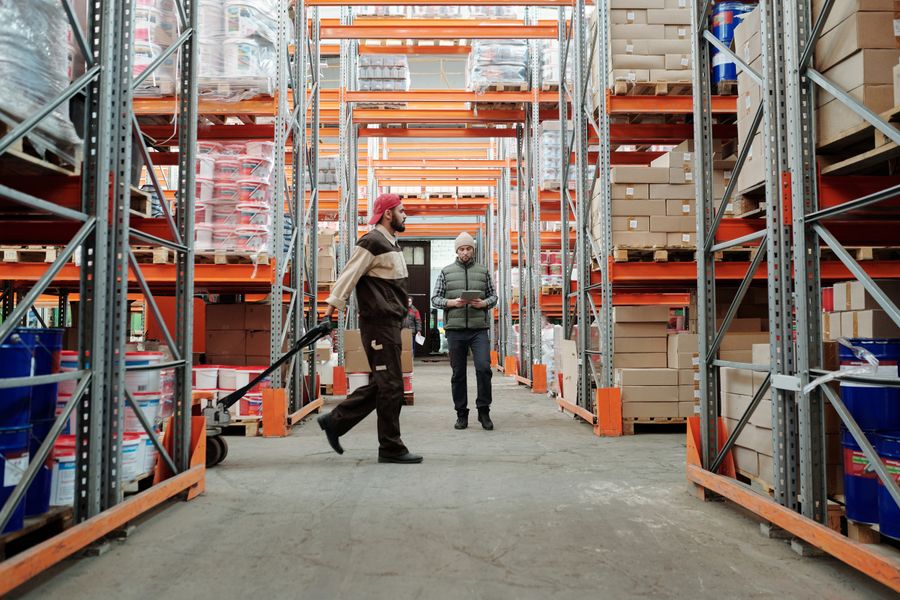
Every warehouse with a forward pick area has the same problem: pick locations run empty. When a picker walks to a location expecting to find product and finds an empty bin instead, the result is wasted time, disrupted pick paths, and either a trip to the reserve area to get the product or a short-ship that disappoints a customer.
Traditional replenishment approaches rely on minimum quantity triggers or fixed schedules. When a pick location drops below a set threshold, a replenishment task is generated. The problem is that these triggers are usually set conservatively (meaning they fire too often for slow movers and not often enough for fast movers), and the timing is disconnected from actual pick demand.
AI replenishment predicts what will be needed and stages it before the need becomes urgent.
Demand-Driven Replenishment Timing
AI replenishment systems look at incoming order data, not just current inventory levels. When the system sees that the next wave of orders will pull 45 cases of a product from a pick location that currently holds 50 cases, it generates a replenishment task now rather than waiting for the minimum threshold to be breached.
This forward-looking approach is significantly different from reactive replenishment. Reactive systems generate replenishment tasks after the problem exists. Demand-driven systems generate them before the problem materializes. The practical difference is fewer stockouts, smoother pick operations, and less emergency scrambling by replenishment staff.
Optimal Replenishment Quantities
How much product to move from bulk to the pick face is a deceptively complex question. Move too little and you will need to replenish again soon, creating extra labor. Move too much and the excess product sits in the pick location, potentially causing congestion or product damage.
AI calculates the optimal replenishment quantity based on the remaining demand for the current shift or day, the physical capacity of the pick location, the product velocity pattern (steady demand versus burst demand), and the cost of a replenishment trip versus the risk of a stockout.
For a fast-moving product with steady demand, the system might recommend filling the pick location to maximum capacity because it will all be consumed within the shift. For a moderately moving product, it might recommend a partial replenishment that covers the next few hours of expected demand without overfilling the location.
Replenishment Task Sequencing
In a busy warehouse, there might be dozens of replenishment tasks pending at any time. The order in which those tasks are executed matters for both warehouse productivity and pick operation continuity.
AI sequencing considers the urgency of each replenishment (how soon will the pick location actually run out), the physical location of both the bulk storage and the pick location (to minimize forklift travel), the current workload of replenishment operators, and any batching opportunities (multiple replenishment moves from the same bulk storage area).
Urgent replenishments for locations that are about to run out during active picking get prioritized over replenishments for locations that still have hours of supply. This prioritization prevents the scenario where a replenishment operator is filling a location that does not urgently need product while a picker stands idle at an empty location waiting for a more critical replenishment.
Integration With Wave Planning
AI replenishment works best when integrated with wave planning. Before a pick wave is released, the system checks whether all pick locations in that wave have sufficient inventory to complete the wave. If any locations will be depleted during the wave, replenishment tasks are generated and completed before the wave starts.
This pre-wave replenishment check eliminates most within-wave stockouts. Pickers start the wave knowing that everything they need is in the pick locations. The remaining stockout risk comes from demand variability within the wave (orders added or quantities changed after the wave was planned), which is relatively small.
Bulk Storage Location Management
AI replenishment also manages the bulk storage side of the equation. It tracks inventory levels in reserve locations, manages the relationship between reserve and forward pick locations, and identifies when reserve stock is running low and needs to be replenished from receiving.
The system also optimizes bulk storage placement. Products with high replenishment frequency are stored in bulk locations that are close to their forward pick locations, minimizing the travel distance for each replenishment trip. This proximity optimization can reduce replenishment labor by 15 to 25 percent compared to random bulk storage assignment.
Labor Planning for Replenishment
Replenishment labor needs vary throughout the day based on order patterns and pick activity. AI systems forecast the replenishment workload by hour and help warehouse managers allocate the right number of replenishment operators at each time period.
During peak pick periods, more replenishment activity is needed to keep pick locations stocked. During slower periods, replenishment staff can be redirected to other tasks. The ability to forecast this workload with reasonable accuracy avoids both understaffing (leading to stockouts) and overstaffing (leading to idle labor).
Measuring Replenishment Performance
AI systems track replenishment performance metrics including stockout frequency (how often pick locations run empty), replenishment response time (how long between task creation and completion), fill rate (percentage of pick demand satisfied from forward locations without needing emergency pulls from bulk), and replenishment labor efficiency (replenishment moves per labor hour).
These metrics provide a clear picture of how well the replenishment process is working and where improvements are possible. Trend analysis shows whether changes to replenishment parameters are having the desired effect.
For more on how AI is improving warehouse operations, see FirmAdapt's logistics and transportation analysis.