










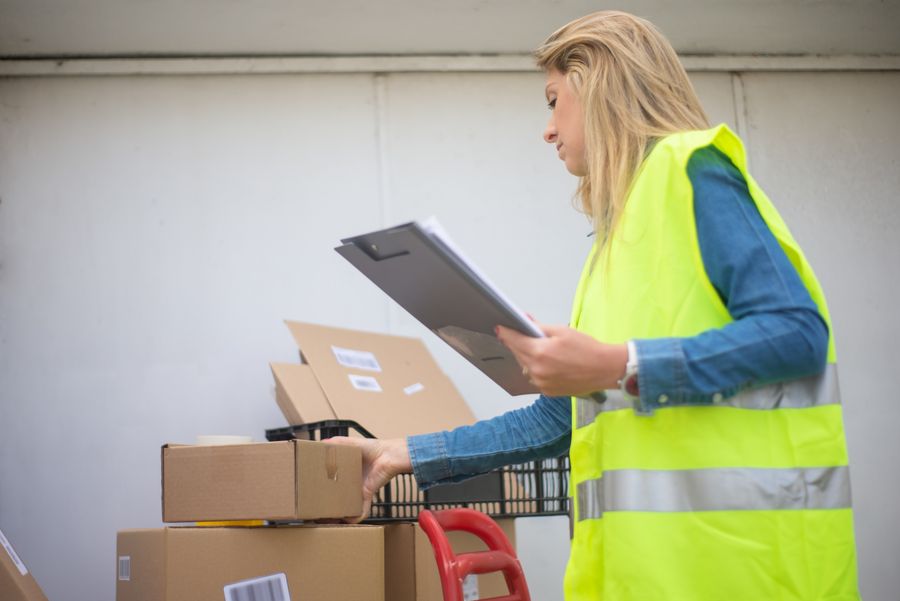
A cross-dock facility in Memphis handles 1,400 inbound shipments per day across 120 dock doors. Each shipment needs to be sorted, potentially broken down, consolidated with other freight heading to the same destination, and loaded onto outbound trailers. The decision of whether to break bulk (depalletize and repalletize) or flow through (move the pallet directly from inbound to outbound) affects labor costs, throughput time, and outbound trailer utilization. Getting this decision right across 1,400 shipments per day is where AI makes a tangible difference.
The Cross-Dock Decision Matrix
Every inbound shipment presents a choice. A pallet of mixed SKUs destined for a single store can flow through directly. A pallet of a single SKU that needs to be split across five different outbound loads must be broken down. The gray area in between is where optimization matters: a pallet that could flow through but would leave the outbound trailer 30% empty, versus breaking it down to better fill two different trailers.
Human supervisors make these decisions based on experience and visible conditions on the floor. They can see that door 47's outbound trailer is nearly full and door 52's is half empty. They cannot simultaneously evaluate the fill rates of all 60 outbound trailers against the attributes of 200 inbound pallets currently in the staging area. The optimization problem exceeds human cognitive bandwidth by a wide margin.
How AI Solves the Allocation Problem
AI cross-dock optimization maintains a real-time model of every inbound and outbound shipment, every trailer's current fill rate, every dock door's status, and the labor available for break-bulk operations. When a new inbound shipment arrives, the system evaluates the best handling path by considering the marginal impact on outbound trailer utilization, the labor required for each option, the time constraints on outbound departures, and the downstream delivery implications.
A large LTL carrier implemented AI cross-dock optimization at three of their hub terminals and measured results against three comparable terminals running traditional operations. The AI-optimized hubs achieved 4.7% higher outbound trailer utilization (meaning fewer trailers needed for the same freight volume), 12% faster average throughput time, and 8% lower labor cost per hundredweight processed.
Labor Allocation and Scheduling
Break-bulk operations are labor-intensive. A dock worker depalletizing and repalletizing freight processes roughly 15-20 pallets per hour. Flow-through moves, using forklifts to shift pallets directly, process 40-50 pallets per hour. The optimal mix of break-bulk and flow-through determines how many workers are needed at any given time.
AI systems predict the inbound mix for each shift based on historical patterns and real-time tracking of inbound trailers. If Tuesday afternoon typically brings a surge of mixed pallets requiring break-bulk, the system recommends scheduling additional dock workers for that window. If an inbound trailer is running late and its freight will now arrive during the night shift, the system adjusts staffing recommendations in real time.
Dock Door Assignment
Which dock door an inbound trailer gets assigned to affects how far workers need to move freight across the facility. Assigning an inbound load from Atlanta to a door adjacent to the outbound trailer heading to Nashville (if most of the Atlanta freight is destined for Nashville) reduces forklift travel time. This sounds trivial, but across 1,400 daily shipments, the cumulative effect of intelligent door assignment reduces total forklift travel distance by 15-25%, directly translating to faster throughput and lower equipment wear.
The AI assigns doors by solving a bipartite matching problem that minimizes total travel distance while respecting constraints like trailer size compatibility, refrigeration capability, and hazmat isolation requirements. Human supervisors typically assign doors based on availability, whichever door is open when the inbound truck arrives, missing the optimization opportunity.
Measuring Cross-Dock Performance
Facilities implementing AI-powered logistics solutions for cross-dock operations typically instrument their facilities with scanning points that track every pallet's movement from inbound door to outbound door. This creates a detailed dataset of actual handling paths, dwell times, and throughput rates that the AI uses to continuously refine its recommendations.
The facilities that see the most improvement tend to be those with the most variability in their freight mix. A cross-dock that handles a consistent mix of full-pallet, single-destination freight has less room for optimization than one handling a diverse mix of break-bulk, partial pallets, and time-sensitive freight. The AI thrives on complexity because that is where human decision-making leaves the most value on the table.