










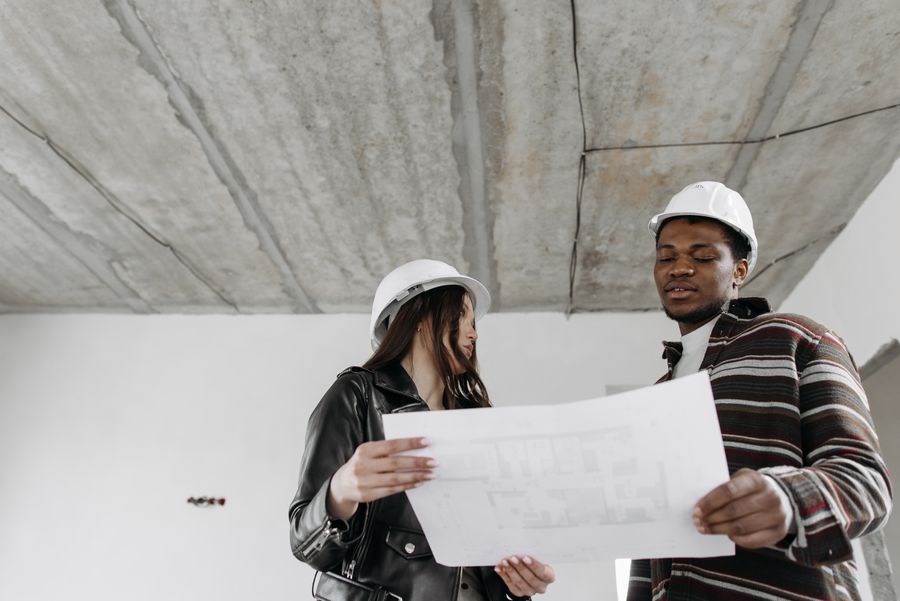
As-built documentation is one of those tasks that everyone agrees is important and nobody wants to do. The concept is straightforward: at the end of construction, you update the design drawings to reflect what was actually built, including all the field modifications, routing changes, and dimensional adjustments that happened during construction. The reality is that as-built documentation is often the last priority during the closeout rush, and the quality ranges from meticulously accurate to essentially useless.
AI photogrammetry is changing this by making as-built documentation a byproduct of normal construction progress tracking rather than a separate closeout task.
How Photogrammetry Creates As-Built Data
Photogrammetry is the process of creating three-dimensional measurements from photographs. On a construction site, this means taking systematic photographs (or using laser scanning) of completed work and processing those images into a 3D point cloud that captures the actual geometry of what was built.
The AI layer converts this raw point cloud data into useful documentation. It identifies building elements within the point cloud: walls, columns, beams, ductwork, piping, conduit, and equipment. It measures dimensions, locations, and elevations. It compares the as-built conditions to the design model and identifies deviations.
The output is not just a point cloud that requires specialized software to view. It is updated BIM models, marked-up floor plans, and dimensional data in formats that the facility owner and their maintenance team can actually use.
Capturing Data During Construction
The traditional approach to as-built documentation is to go back after everything is installed and try to document what is there. For work that gets concealed, like MEP rough-in behind drywall, this means either relying on field notes taken during construction or doing destructive investigation to find what is actually there.
AI photogrammetry changes this by capturing as-built conditions at each stage of construction. When the mechanical rough-in is complete and before the drywall goes up, photographs or scans capture the exact routing of every duct, pipe, and conduit. The AI processes this data into as-built documentation for that phase while the work is still visible and accessible.
This phased capture approach produces dramatically more accurate as-built documentation than the traditional end-of-project approach, because the data is captured when the work is visible rather than reconstructed from memory or field notes months later.
Deviation Detection
One of the most useful features is automated deviation detection. The AI compares the as-built point cloud to the design model and highlights everywhere the construction deviates from the design. Some deviations are intentional field modifications that were documented through RFIs or change orders. Others might be unauthorized changes or installation errors that need to be evaluated.
The deviation report includes the magnitude and direction of each deviation, whether it falls within acceptable tolerances, and whether it affects other building systems. A duct that was installed two inches lower than designed might be within tolerance for the ductwork itself but creates a clearance conflict with a cable tray below it.
This automated deviation detection is valuable not just for documentation but for quality control during construction. Catching deviations early, while correction is still feasible, prevents the much more expensive rework or acceptance-with-compromise decisions that happen when deviations are discovered late.
From Point Cloud to Usable Documents
Raw point cloud data is impressive but not particularly useful for facility operations staff who need to locate a valve or find the routing of a conduit. The AI converts point cloud data into traditional documentation formats: updated floor plans, reflected ceiling plans, equipment schedules, and system diagrams that look like conventional construction drawings.
The AI can also generate cross-sections and details at any location within the scanned area, producing documentation that the original design might not have included. Need to know exactly what is in the ceiling space at a particular location? The AI can generate a cross-section from the scan data showing every element with accurate dimensions and clearances.
Integration With Facility Management
The ultimate consumer of as-built documentation is the facility owner's maintenance team. AI-generated as-built models can be directly integrated with facility management software, providing maintenance personnel with accurate spatial information about every building system.
When a maintenance technician needs to access a valve, the system can show them exactly where it is, what other systems are in the vicinity, and what access path will reach it with the least disruption. This level of documentation detail is rarely achieved with traditional as-built methods but is a natural output of the photogrammetry process.
Construction companies looking to improve their as-built documentation quality while reducing closeout effort can explore how AI-powered construction documentation tools automate the capture and processing of field conditions.
The Investment Case
Systematic photogrammetric capture during construction requires an upfront investment in equipment, training, and processing time. The return comes from multiple sources: reduced closeout duration, higher quality as-built documentation that meets owner requirements, fewer disputes about existing conditions during future renovation work, and the ability to use the as-built model for facility management and maintenance planning. For owners with long-term facility management responsibilities, the value of accurate as-built data far exceeds the cost of capturing it.