










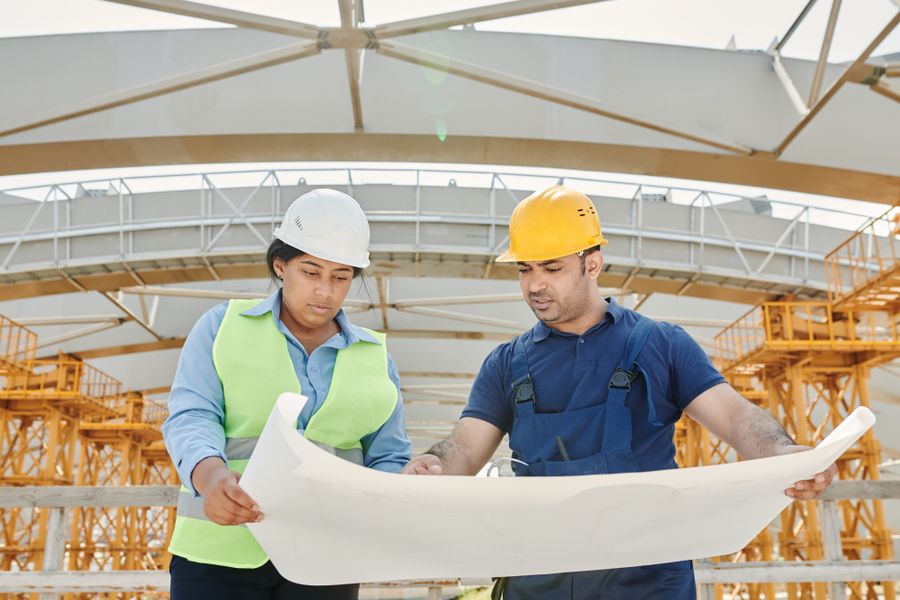
Falls from elevation are the number one killer in construction. This is not a new problem. It has been the leading cause of construction fatalities for as long as anyone has been tracking the data. And despite decades of safety regulation, training programs, and equipment improvements, workers are still dying from falls every week.
The issue is not usually a lack of fall protection equipment. Most projects have the guardrails, the harnesses, and the anchor points. The issue is the gap between having the equipment and consistently using it correctly, especially during the brief moments when protection is removed or bypassed.
Where Falls Actually Happen
The pattern in fall fatalities is instructive. Many fatal falls happen not during inherently dangerous tasks where everyone is on high alert, but during routine activities near unprotected edges. A worker walks past an opening where a guardrail was temporarily removed. Someone leans over an edge to guide a load without tying off. A crew works on a lower roof adjacent to a higher parapet without edge protection because the work is on the lower level and the fall exposure seems minimal.
These situations develop and resolve quickly. A guardrail is removed for ten minutes to bring materials through and nobody replaces it. A worker unclips their harness to move to a new anchor point and gets distracted before reattaching. The exposure window might be brief, but that is when accidents happen.
Traditional safety monitoring cannot catch these transient violations. A safety manager walking the site might visit a particular area once or twice a day. If the violation exists for fifteen minutes and the safety manager is not there during those fifteen minutes, it goes undetected.
How AI Monitoring Works
AI fall protection monitoring uses computer vision from site cameras and, in some implementations, sensor data from smart harnesses to provide continuous verification of fall protection compliance.
The computer vision component identifies workers near leading edges, floor openings, and elevated work areas, then verifies that appropriate fall protection is in place. This includes checking for the presence of guardrails at required locations, verifying that workers in harnesses are actually connected to anchor points, and detecting workers in areas where fall protection is required but not being used.
Smart harness systems add another layer by detecting whether the harness is properly donned and whether the lanyard is connected to an anchor point. Some systems can determine if the anchor point has adequate capacity for the fall arrest load. The data from these sensors feeds into the AI platform for continuous monitoring.
Detecting Guardrail Gaps
One of the most practical applications is monitoring guardrail systems for gaps and missing components. AI trained on images of compliant guardrail installations can identify when a section has been removed, when a mid-rail is missing, when a toeboard has been displaced, or when a guardrail has been damaged by equipment and no longer meets the required strength.
The system maintains a map of all required guardrail locations based on the current building conditions and monitors those locations continuously. When a guardrail is removed, the system starts a timer and escalates the alert if it is not replaced within a defined period. This catches the common situation where a guardrail is removed for a legitimate purpose but never reinstalled.
Leading Edge Tracking
As construction progresses, the locations requiring fall protection change. A floor edge that needs a guardrail today will have a wall tomorrow. An opening that was covered last week has been uncovered for installation of a piece of equipment. The leading edge, the boundary where fall protection is required, is a moving target.
AI systems track this progression by analyzing building progress and updating the fall protection requirement map accordingly. This is more effective than relying on project teams to manually update protection plans as conditions change, because the AI catches the gaps between when conditions change and when protection is updated.
Worker Behavior Analysis
Beyond equipment monitoring, AI can analyze worker behavior patterns near fall hazards. Workers who consistently work close to edges without protection, who routinely bypass guardrails instead of using designated access points, or who detach fall arrest systems in high-risk areas can be identified not for punitive purposes but for targeted retraining.
The behavioral data also reveals systemic issues. If workers on a particular floor or in a particular area consistently bypass fall protection, the problem might be that the protection is interfering with the work or that the access points are poorly located. Fixing the root cause is more effective than repeatedly correcting individual violations.
Construction companies serious about reducing fall incidents can investigate how AI-based construction safety monitoring provides the continuous oversight that periodic inspections cannot match.
The Compliance Documentation Value
Continuous monitoring also creates a compliance record that periodic inspections cannot provide. The system generates documentation showing the state of fall protection at every monitored location throughout the day, including timestamped evidence of compliance and records of how quickly any identified violations were corrected.
This documentation supports regulatory compliance and provides liability protection. But more importantly, it creates accountability. When everyone on site knows that fall protection compliance is being monitored continuously, behavior changes. The guardrail that might have stayed down for an hour gets replaced in ten minutes. The harness that might have gone unclipped gets reattached. Awareness changes behavior, and continuous monitoring creates continuous awareness.