










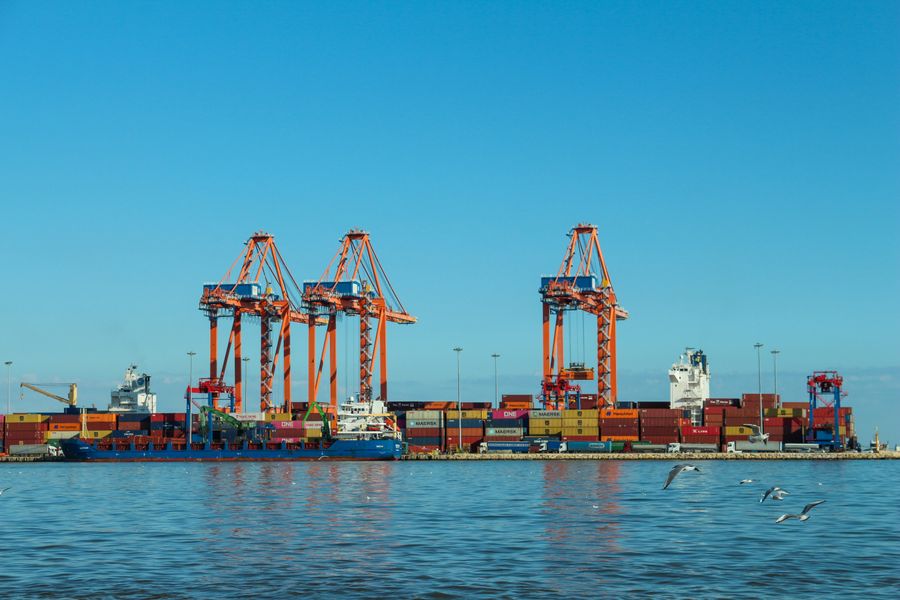
Port congestion is not a random event. It follows patterns driven by vessel schedules, seasonal cargo volumes, labor dynamics, weather, and infrastructure constraints. The problem is that by the time congestion becomes visible (vessels anchoring offshore, truck queues stretching for miles), it is already too late to do anything cost-effective about it. Your containers are committed to that port, and you are going to pay for the delay.
AI congestion prediction changes the timeline. Instead of reacting to congestion after it happens, logistics teams get advance warning days or weeks ahead, giving them time to adjust vessel bookings, reroute cargo to alternative ports, or pre-position trucks and chassis to handle the downstream effects.
Data Sources That Feed Congestion Models
AI congestion models ingest data from multiple sources to build a comprehensive picture of port conditions. AIS (Automatic Identification System) data shows the real-time position, speed, and heading of every vessel in a port's approach zone. This reveals how many vessels are waiting for berth space and how quickly the queue is moving.
Terminal operating data provides throughput metrics: how many containers are being loaded and unloaded per hour, how long vessels are spending at berth, and what the yard density looks like. When yard density approaches capacity, processing slows down and congestion builds.
Labor data is a critical input. Many ports operate on shift schedules, and labor disputes or shortages directly impact throughput. AI models that incorporate labor availability data can predict slowdowns before they manifest in vessel queue lengths.
Weather forecasts affect port operations directly. High winds shut down crane operations. Fog limits vessel movements. Storm systems disrupt the entire coastal logistics network. AI models incorporate weather predictions to estimate their impact on port throughput.
Historical patterns provide the baseline. Most ports have seasonal congestion cycles driven by import patterns (peak season for holiday retail inventory, agricultural export seasons). The AI uses historical data to establish expected conditions and then identifies when current signals deviate from the baseline.
Prediction Accuracy and Lead Time
Current AI congestion models achieve useful accuracy at different time horizons. Short-term predictions (1 to 3 days out) are highly accurate because most of the influencing factors (vessel positions, weather, labor) are already known. Medium-term predictions (1 to 2 weeks) are reasonably accurate and the most actionable, because this is the window where routing decisions can still be changed. Long-term predictions (1 to 2 months) are directional, useful for planning but not precise enough for specific routing decisions.
The practical value is in the 1-to-2-week prediction window. At this lead time, a shipper can redirect a vessel to an alternative port, adjust inland transportation arrangements, and notify customers about potential delivery timeline changes. Making these adjustments a week in advance is dramatically cheaper than making them after the vessel is already anchored in a congested port approach.
Alternative Port Selection
When AI predicts congestion at the primary port, the routing system evaluates alternative ports based on their current and predicted conditions, available capacity, inland transportation connections, and total cost impact. Rerouting from Long Beach to Oakland might add $300 in port costs but save $2,000 in demurrage and detention charges. The AI quantifies these tradeoffs.
The alternatives are not always obvious. A cargo destined for the Midwest might normally route through the West Coast, but during severe West Coast congestion, East Coast or Gulf ports with rail connections to the same destination might be faster and cheaper overall. AI routing evaluates these non-standard alternatives that human planners might not consider because they fall outside normal lane patterns.
Port infrastructure differences matter in the evaluation. Not every port can handle every vessel size. Draft restrictions, crane capacity, and intermodal rail connections all constrain which ports are viable alternatives for specific cargo. AI routing systems maintain detailed port capability databases to ensure recommended alternatives are actually feasible.
Downstream Impact Management
Port congestion does not just affect the ocean leg. It cascades through the entire inland logistics chain. When vessels arrive late, truck pickup appointments need to be rescheduled. Rail connections may be missed. Warehouse receiving schedules shift. Customer delivery promises are at risk.
AI systems model these downstream impacts and trigger adjustments across the logistics chain automatically. When a predicted port delay will cause a container to miss its rail connection, the system evaluates whether to hold the container for the next available train, switch to truck for the inland leg, or rebook to a different rail service. Each option is costed out, and the best alternative is recommended or auto-booked depending on the shipper's authorization settings.
Customer communication is part of this cascade management. When a delay is predicted, the system can automatically notify downstream partners with updated ETAs, giving them time to adjust their own operations. This proactive communication is far better than the alternative of discovering delays after they have already caused problems at the receiving end.
Continuous Learning and Model Improvement
Congestion prediction models improve over time as they process more data and observe outcomes. When the model predicts congestion that does not materialize, or misses congestion that does occur, these errors feed back into the training data and improve future predictions.
The models also adapt to structural changes at ports. When a port invests in new cranes, expands a terminal, or changes its operating hours, the historical data may no longer be representative. AI models detect these structural breaks in the data and adjust their baselines accordingly, rather than continuing to predict based on outdated capacity assumptions. For more on logistics intelligence tools, visit our logistics and transportation industry page.